Request for information
 Tsukimi GalleryTsukimi Gallery
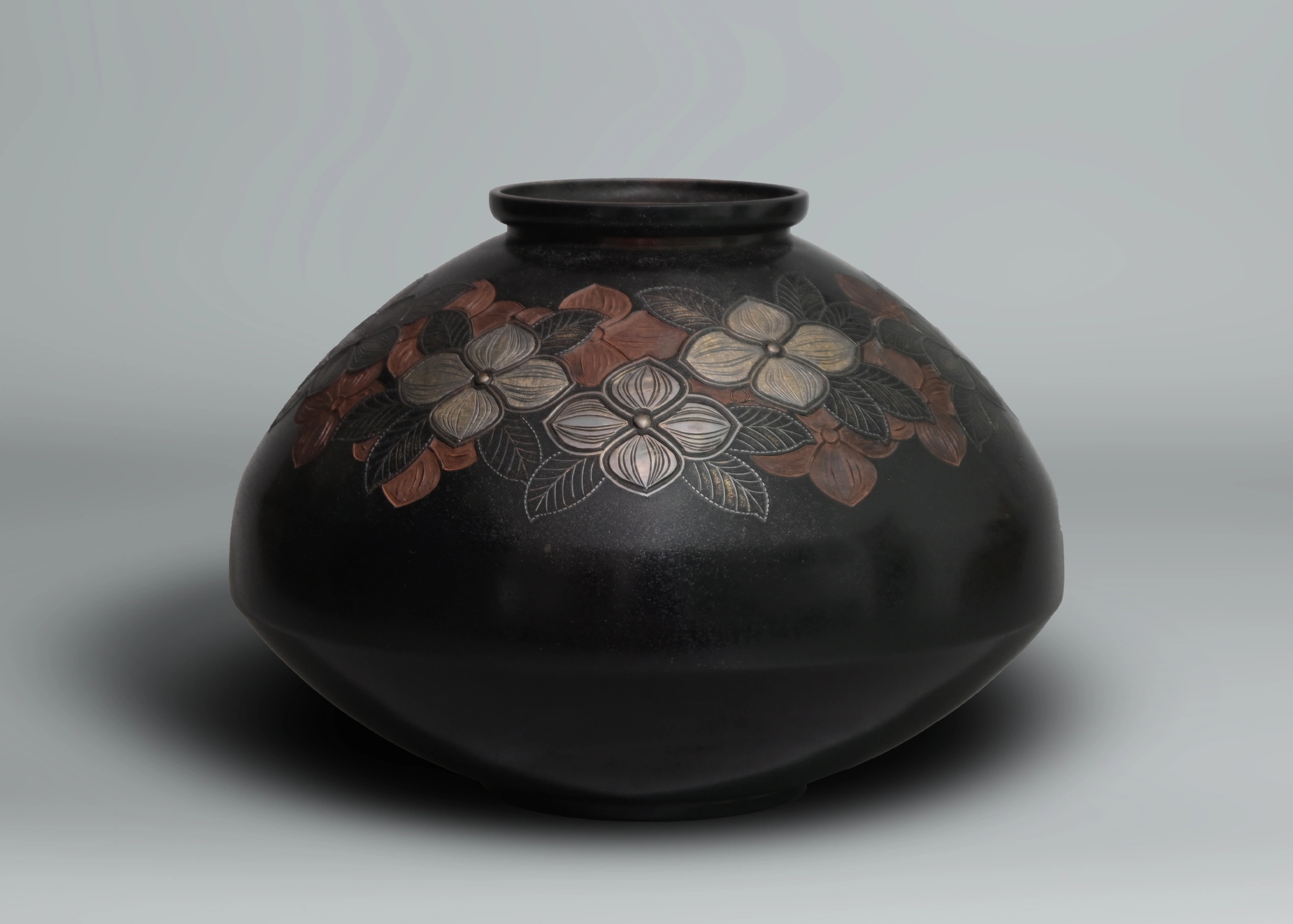
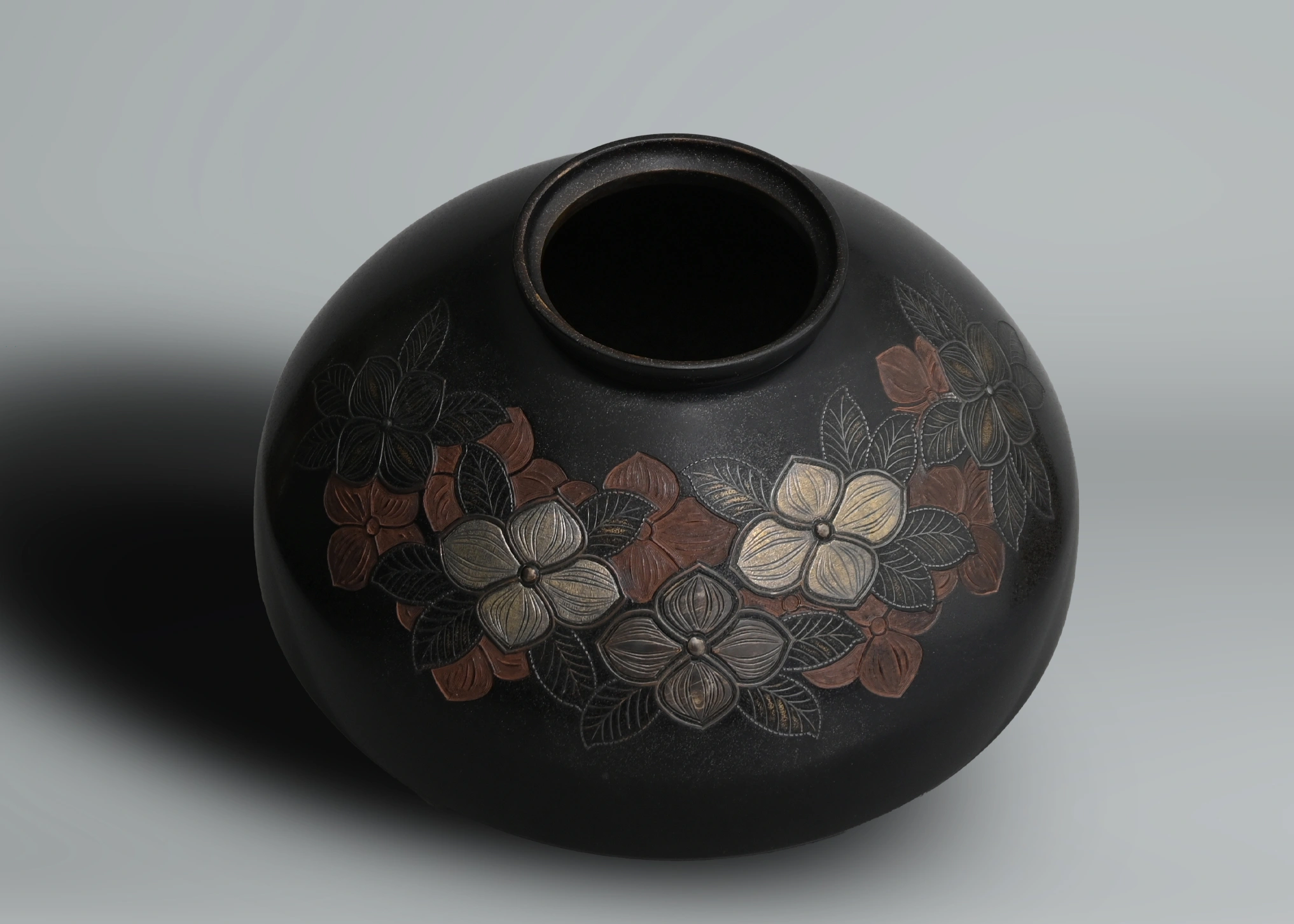
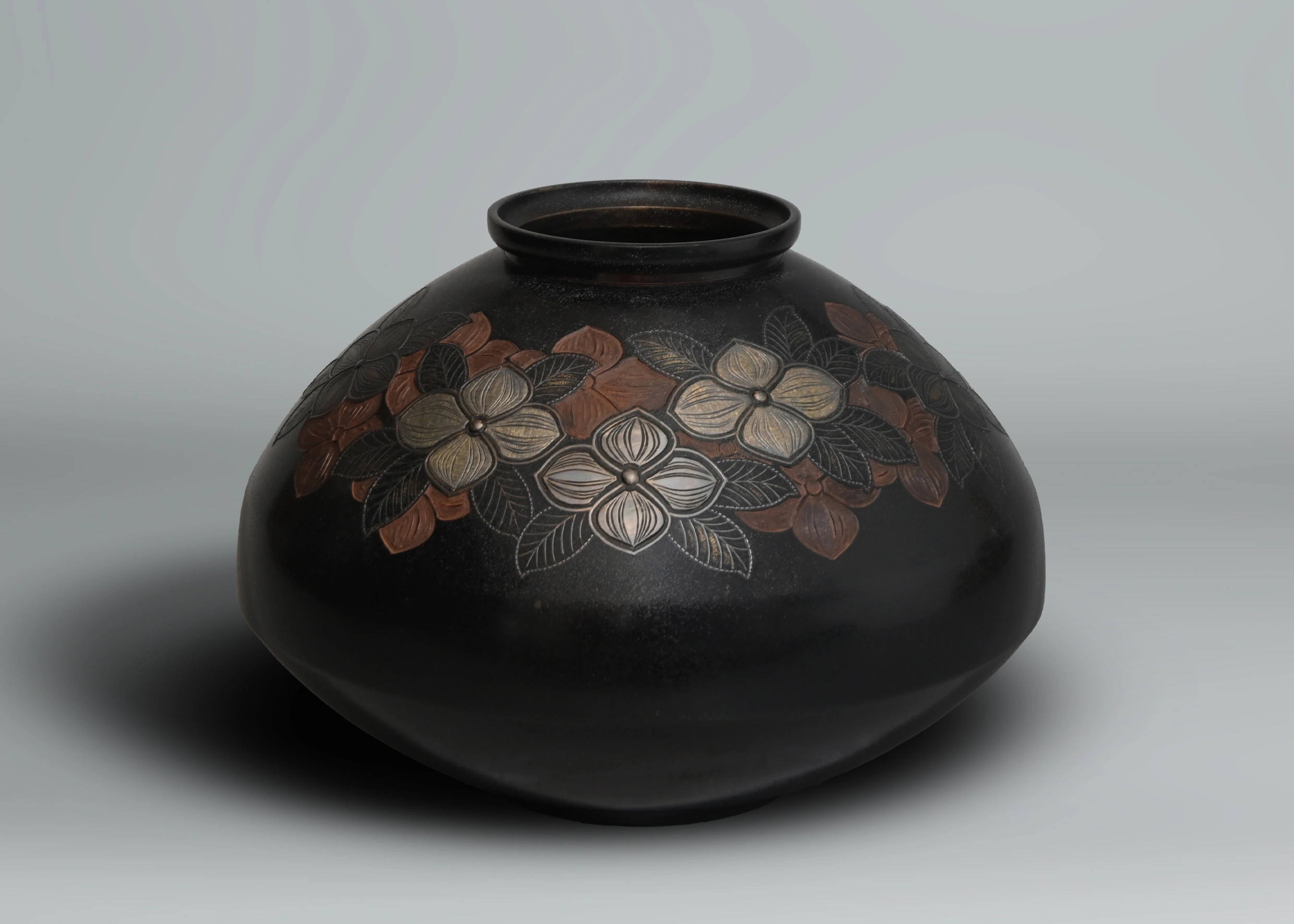
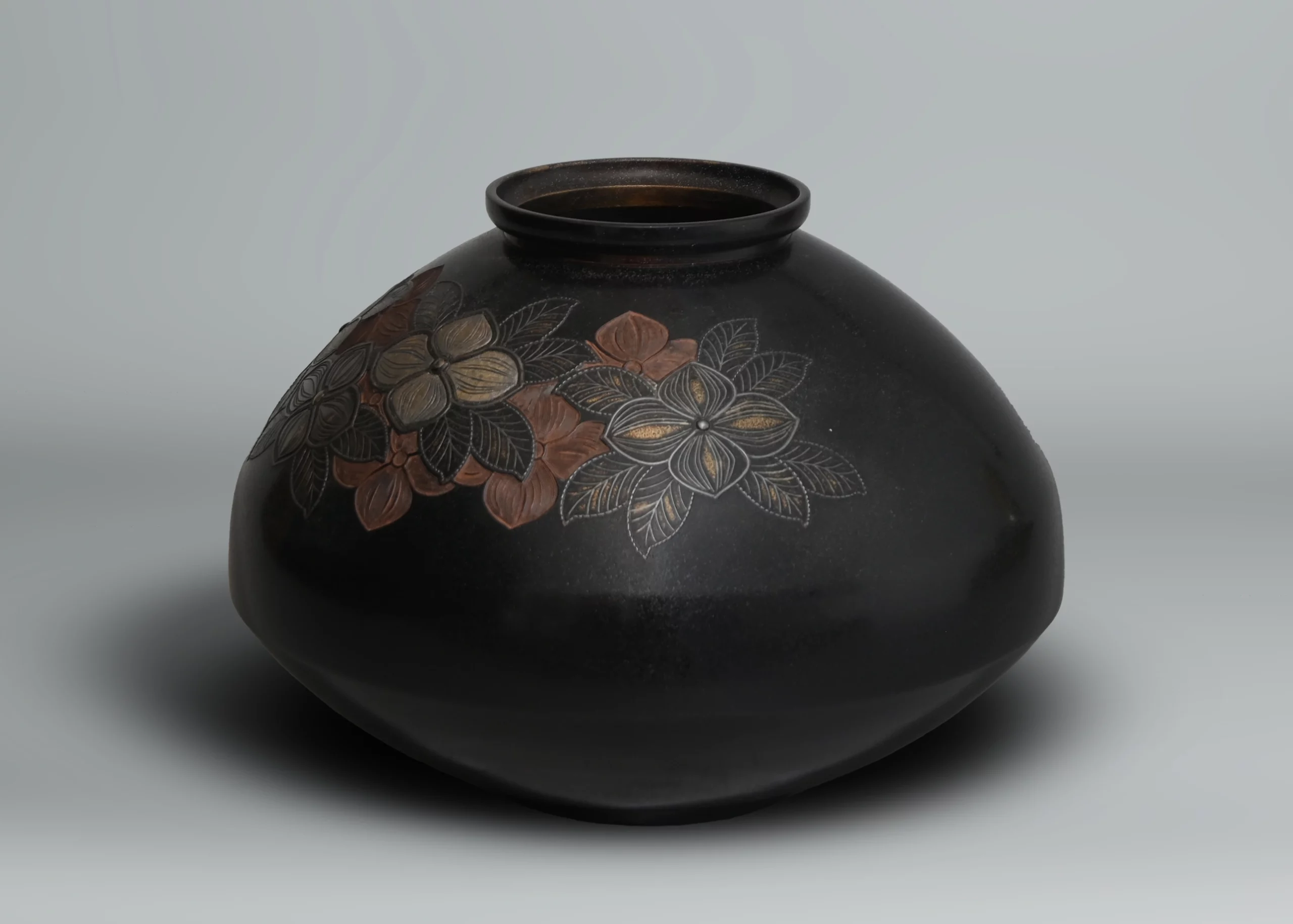
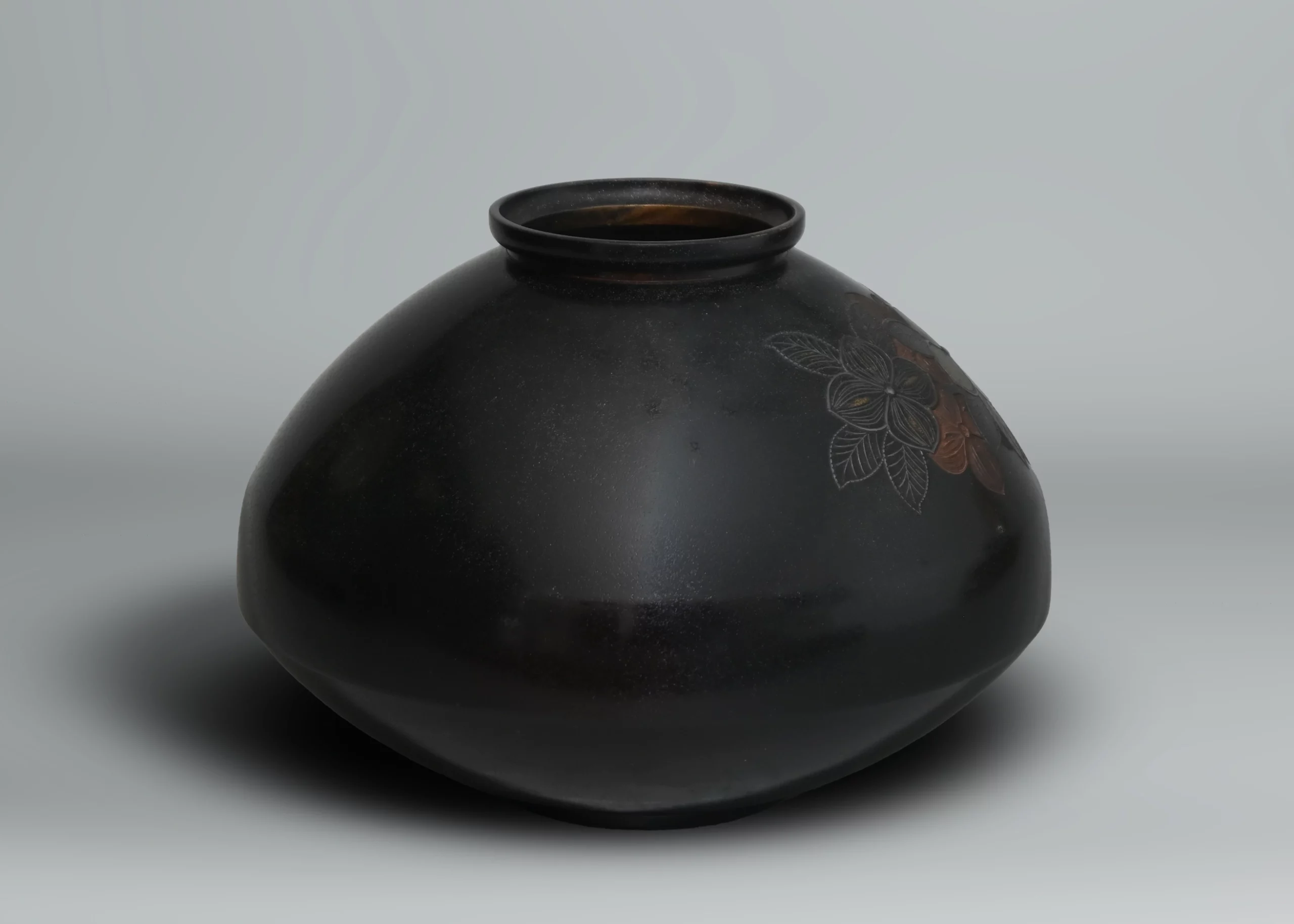
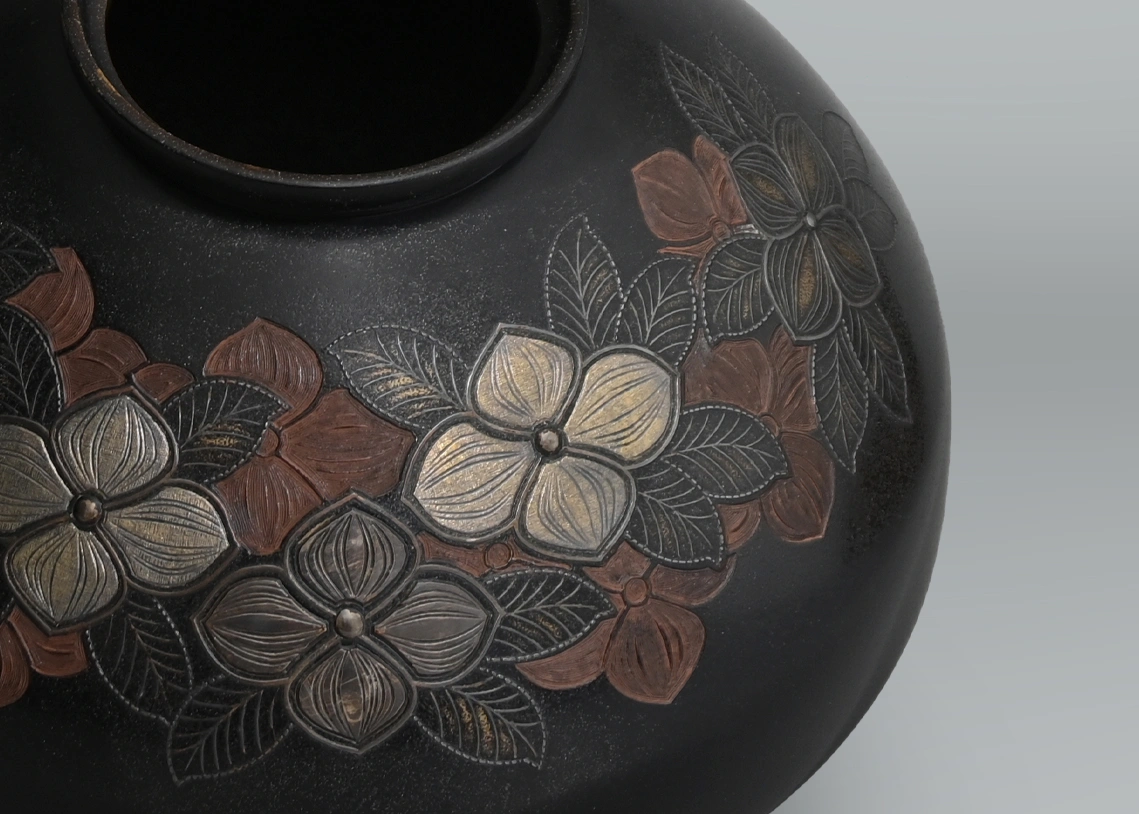
Bronze vase with a dark brown patina, inlaid with dogwood flowers.
Signed Keisen on the base and preserved in its original storage box (tomobako).
Ere Showa, circa 1960-1980
H. 20,5 cm, Diam. 27,5 cm
The vase is decorated with dogwood flowers, a plant associated with Buddhist monastic life and a symbol of lasting friendship and brotherhood. This decoration is a true showcase of the techniques mastered by Honbo Keisen. A remarkable metal inlay unfolds across three levels of depth, combining engraving (chōkin), metal inlay (zōgan), and silver wire inlay outlining the motif — the artist's great specialty.
2 450,00 €
About Honbo Keisen
Honbo Keisen (1910-1987) was born into a family of metal casters in Kanaya-machi, the historic quarter of Takaoka's metalworkers. In 1924 he entered the Toyama Prefectural School of Arts and Crafts, engraving department, then trained for four years under a local engraver before setting up his own workshop around the age of twenty-two. Self-taught, he also studied calligraphy and Japanese painting.
First recognized in 1955 by the Takaoka Industrial Association, he was appointed head of the Takaoka Engravers' Guild in 1966, a role he later continued as an advisor. From 1972 onward, he exhibited thirteen times at the Exhibition of New Works in Traditional Metalcraft, and six times at the Japan Traditional Art Crafts Exhibition (Kōgei Ten). He was repeatedly honored at the Toyama Traditional Art Crafts Exhibition, winning the gold medal in 1973 and, in 1976, the silver medal along with the Takaoka Mayor's Prize for a bronze vase decorated with the twelve zodiac animals.
In 1976, he was among the first craftsmen in Japan to be certified as a Traditional Craftsman (dentō kōgei-shi) by the Ministry of International Trade and Industry, and became a full member of the Japan Kogei Association that same year. He continued exhibiting at the Japan Traditional Art Crafts Exhibition into the early 1980s. He was awarded the Order of the Rising Sun, 7th Class, in recognition of his contribution to preserving Takaoka's traditional crafts. Works by his hand are now held in the collection of the Takaoka Municipal Museum.