
Ceramic
Tsukimi Gallery presents an eclectic selection of Japanese ceramics, from the Taishō era to the present day. These works share a common thread: they bridge historic techniques and contemporary creation, chosen for the excellence of their technical execution and aesthetic presence.
Following the Second World War, the renewal of ceramic art brought with it a need to preserve a heritage threatened by the turbulence of the postwar years. This dual movement, still felt today in fine craftsmanship, shapes our selection. It brings together ceramicists recognised at major national craft exhibitions (Kōgei Ten), who continue to rethink and enrich age-old techniques.
Visitors will find in our catalogue many of the principal techniques of Japanese ceramics still preserved today — techniques often centuries old, which have helped shape the cultural identity of Japan's regions:
- Iroe Iroe : polychrome decoration painted over enamel
- Bizen-yaki : unglazed stoneware fired with wood, one of the oldest techniques in Japan
- Céladon / Seiji : a distinctive glaze in shades of green-gray
- Neriage : marbling created by blending colored clays before shaping
- Saiyū : colored glazes on porcelain, a technique notably illustrated by works from Living National Treasure Tokuda Yasokichi III
- Yūri-kinsai : gold decoration applied beneath the glaze
- Mumyōi-yaki : ceramics shaped from the iron-rich clay of Sado Island, a technique associated with Living National Treasure Sekisui Itō V
Each of these techniques is inseparable from a specific region, kiln, or lineage of craftsmen, and continues to be passed down and reinvented by contemporary ceramicists. In choosing a piece of Japanese ceramics from Tsukimi Gallery, you acquire a documented work whose technique, origin, and artist's background are clearly identified.
Showing 1–8 of 19 results
-
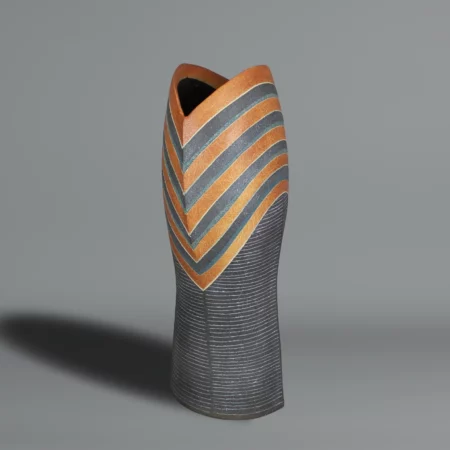
Large vase with coloured bands design
1 300,00 € Add to basket -
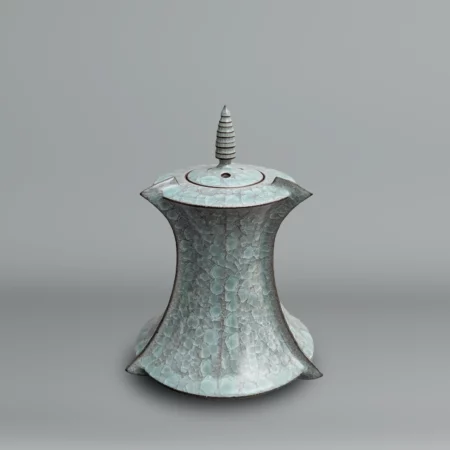
Stoneware incense-burner with crackled celadon glaze
2 700,00 € Add to basket -
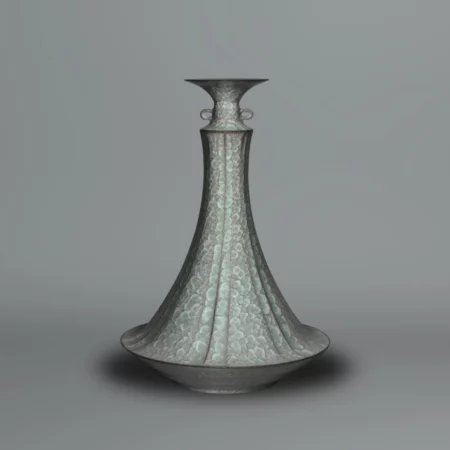
Large cracked celadon bottle vase
3 800,00 € Add to basket -
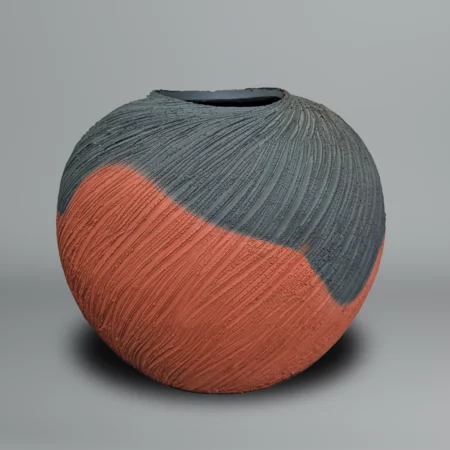
Mumyōi Ceramic Vase with Combed Decoration
2 250,00 € Add to basket -

Vase à glaçure verte gravé de décor géométrique
1 600,00 € Add to basket -
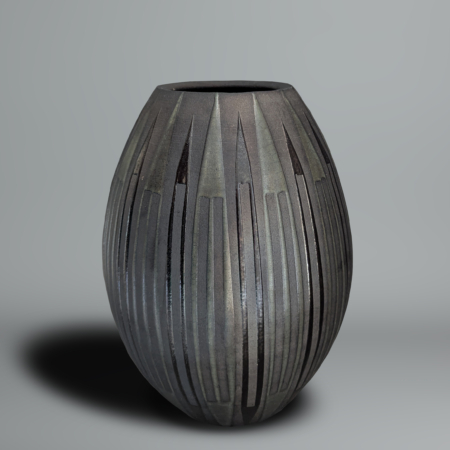
Otani stoneware vase with vertical glazed decoration
920,00 € Add to basket -
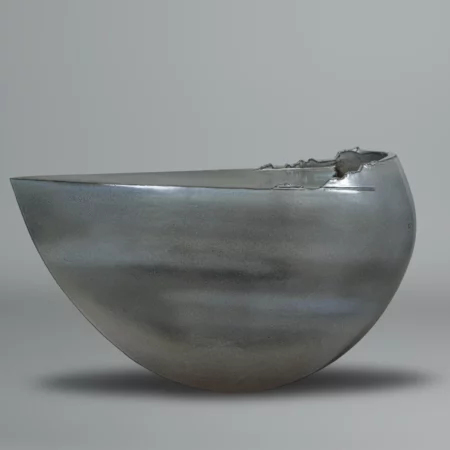
Monumental stoneware vase
3 500,00 € Add to basket -
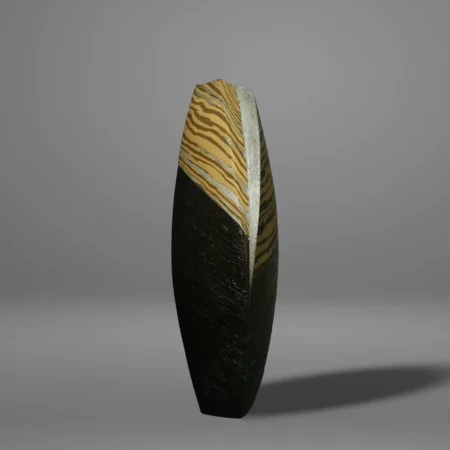
Tall ceramic vase
1 600,00 € Add to basket