
Metalwork
Less known to the general public than ceramics, the art of modern Japanese metalwork is nonetheless rooted in an equally centuries-old history. Under the Edo period, its production turned mainly toward samurai weapons and armor, objects linked to Buddhist worship, and everyday tableware. The upheaval of the Meiji era — the abolition of the warrior order, the promotion of Shintoism by the new government — sparked a revival: production shifted toward export, and ancient techniques, far from being forgotten, were put to the service of art objects that would showcase Japanese craftsmanship at the great international exhibitions.
In the aftermath of the Second World War, these skills were recorded and protected, and artisans continue to carry on this heritage today. Several production centers remain particularly active, starting with Takaoka, a city of foundries renowned for its inlay work; Tsubame, in Niigata Prefecture, home to the Gyokusendo workshop, which specializes in hammering; and the Ishikawa region, rich in a long-standing craft tradition.
Tsukimi Gallery selects metal pieces spanning a wide range of techniques, where attention to detail and artistic craftsmanship come together in this particularly demanding discipline.
- Tankin : hammering, which shapes a piece without fusion or a mold
- Chūkin : casting
- Chōkin : engraving and chasing, which add patterns and relief to an already-formed metal piece. Notable among these is katakiribori, a technique that engraves the surface with lines of varying thickness to imitate the stroke of a brush, as well as nanako-uchi, also known as ishime (surface granulation), which involves hammering tiny granular indentations into the metal to give it a beautiful texture
- Zōgan : the inlay of one precious metal into another to create a design. This technique includes several variants: low-relief inlay (hira-zōgan), high-relief inlay (takaniku-zōgan), polished-out inlay (togidashi-zōgan), and nunome-zōgan, which involves hammering thin sheets of gold or silver into a finely engraved mesh-like grid on the metal's surface
- Chakushoku / patina : the coloring of the metal's surface through chemical reactions of great precision
Showing 1–8 of 11 results
-
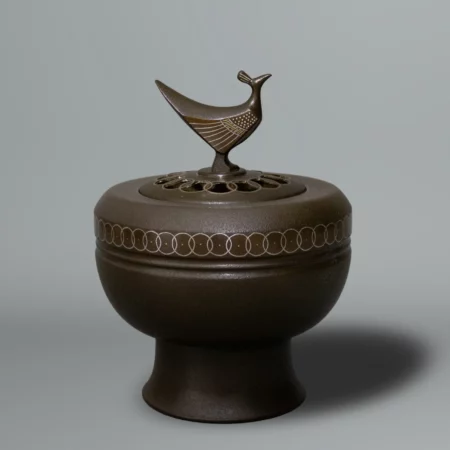
Bronze incense burner
1 700,00 € Add to basket -
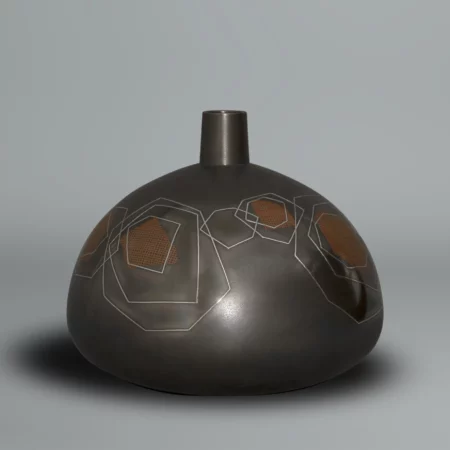
Bronze and gold vase
3 200,00 € Add to basket -
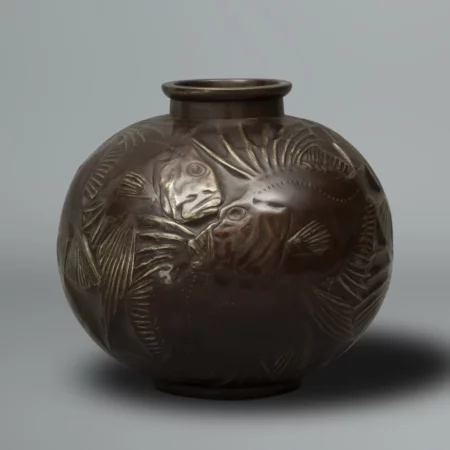
Bronze vase with fish
Lire la suite -
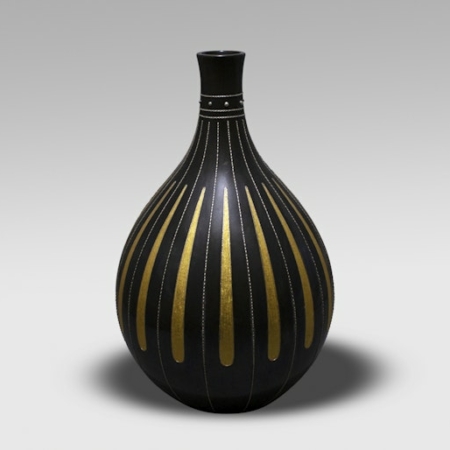
Bronze and gold vase
2 400,00 € Add to basket -
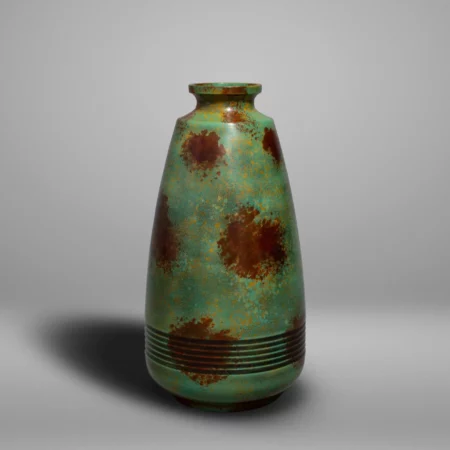
Copper vase with green patina
Lire la suite -
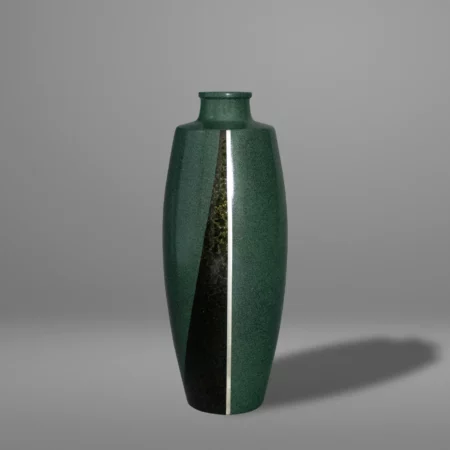
Green patinated copper vase
450,00 € Add to basket -
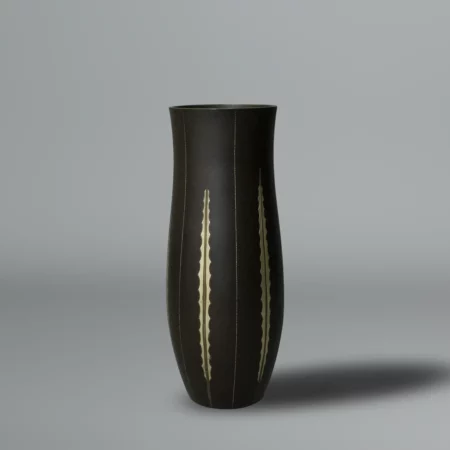
Dark-brown, inlaid copper vase
420,00 € Add to basket -
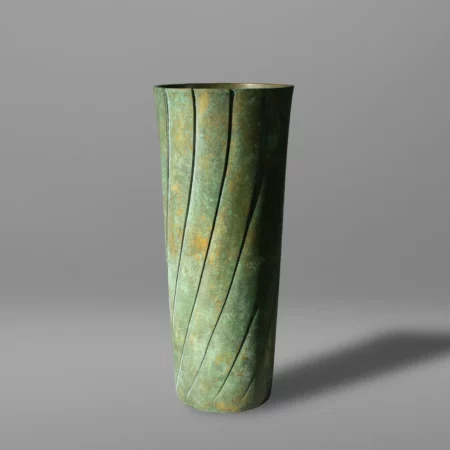
Copper vase with green patina
620,00 € Add to basket