Request for information
 Tsukimi GalleryTsukimi Gallery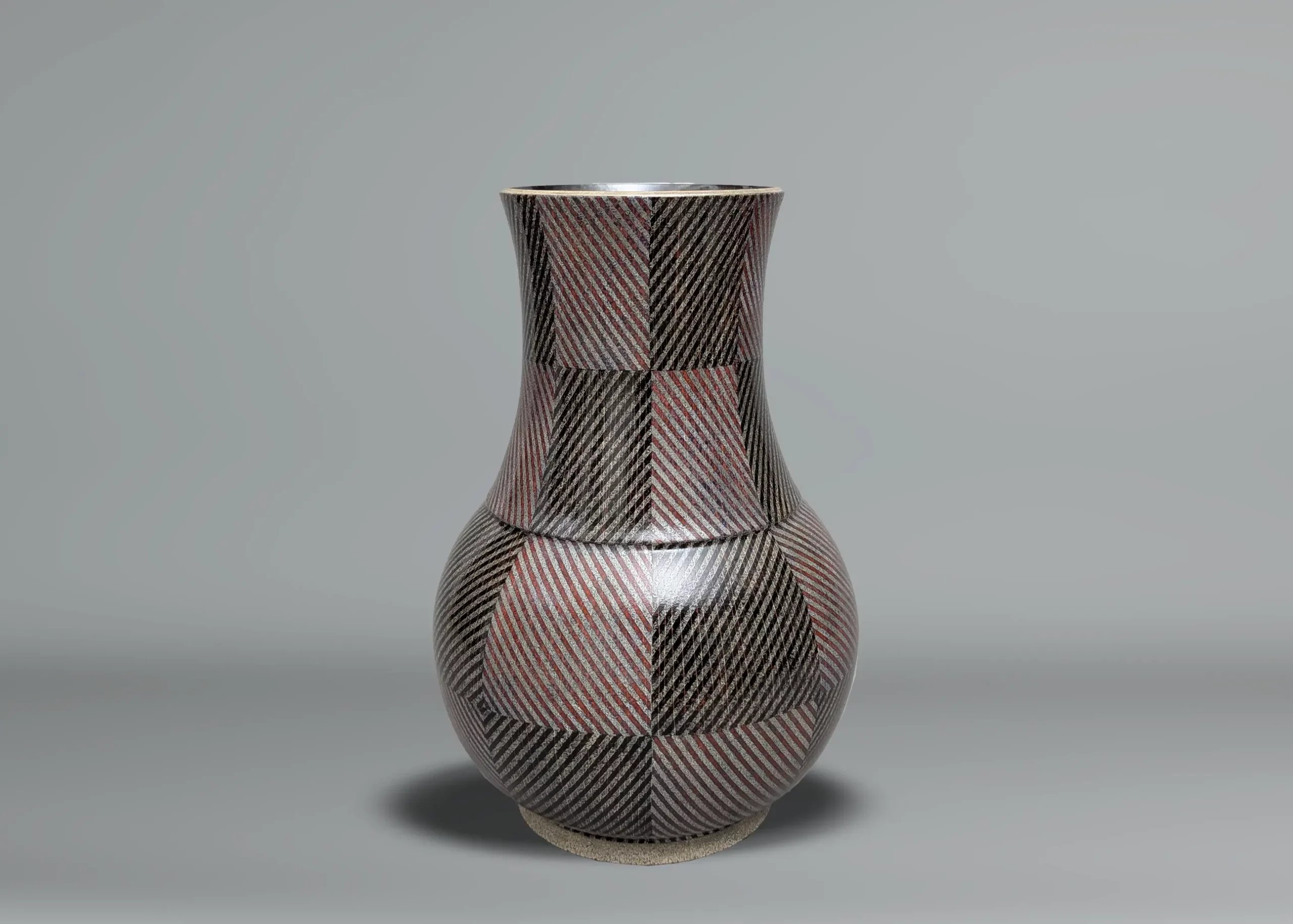
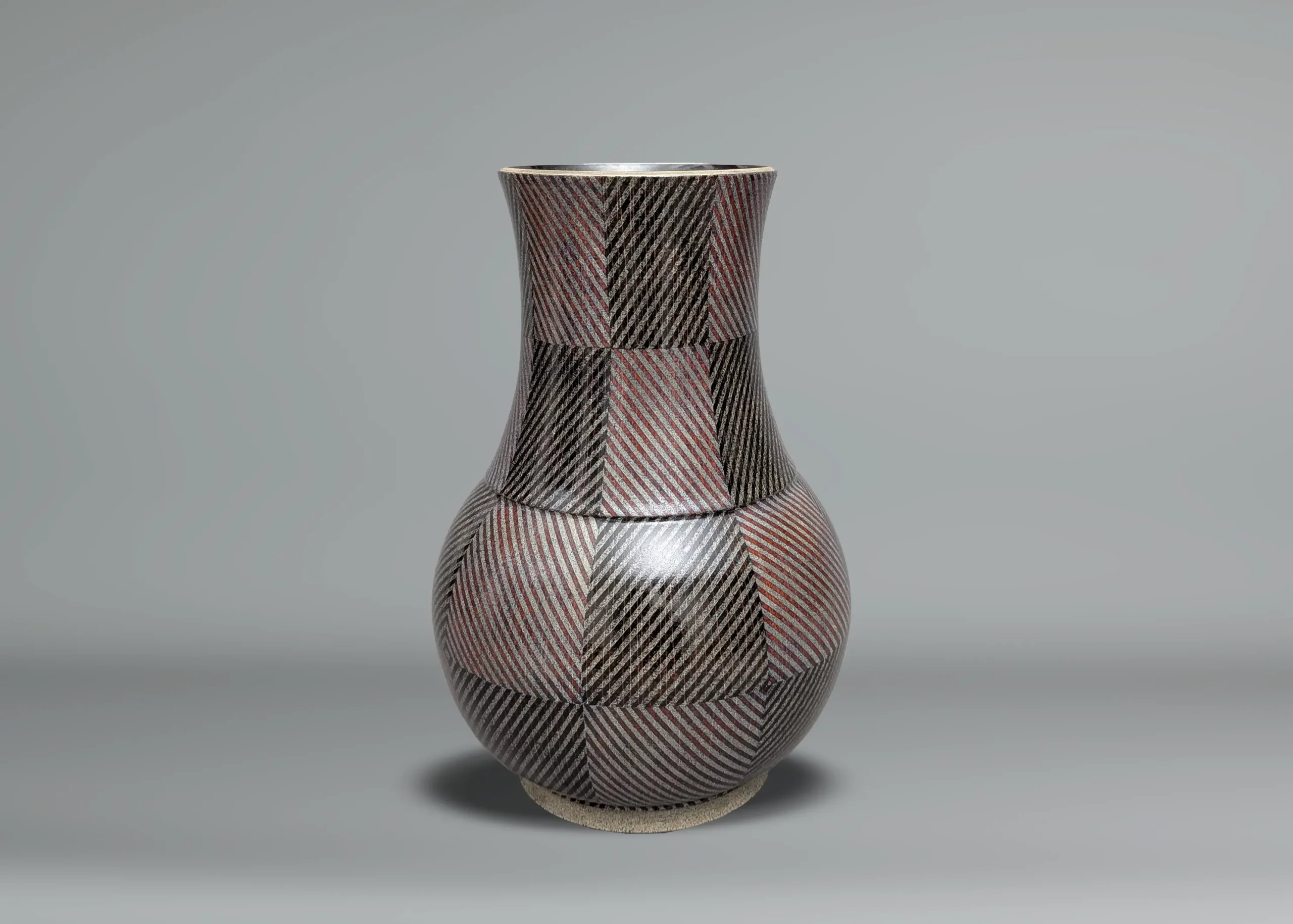
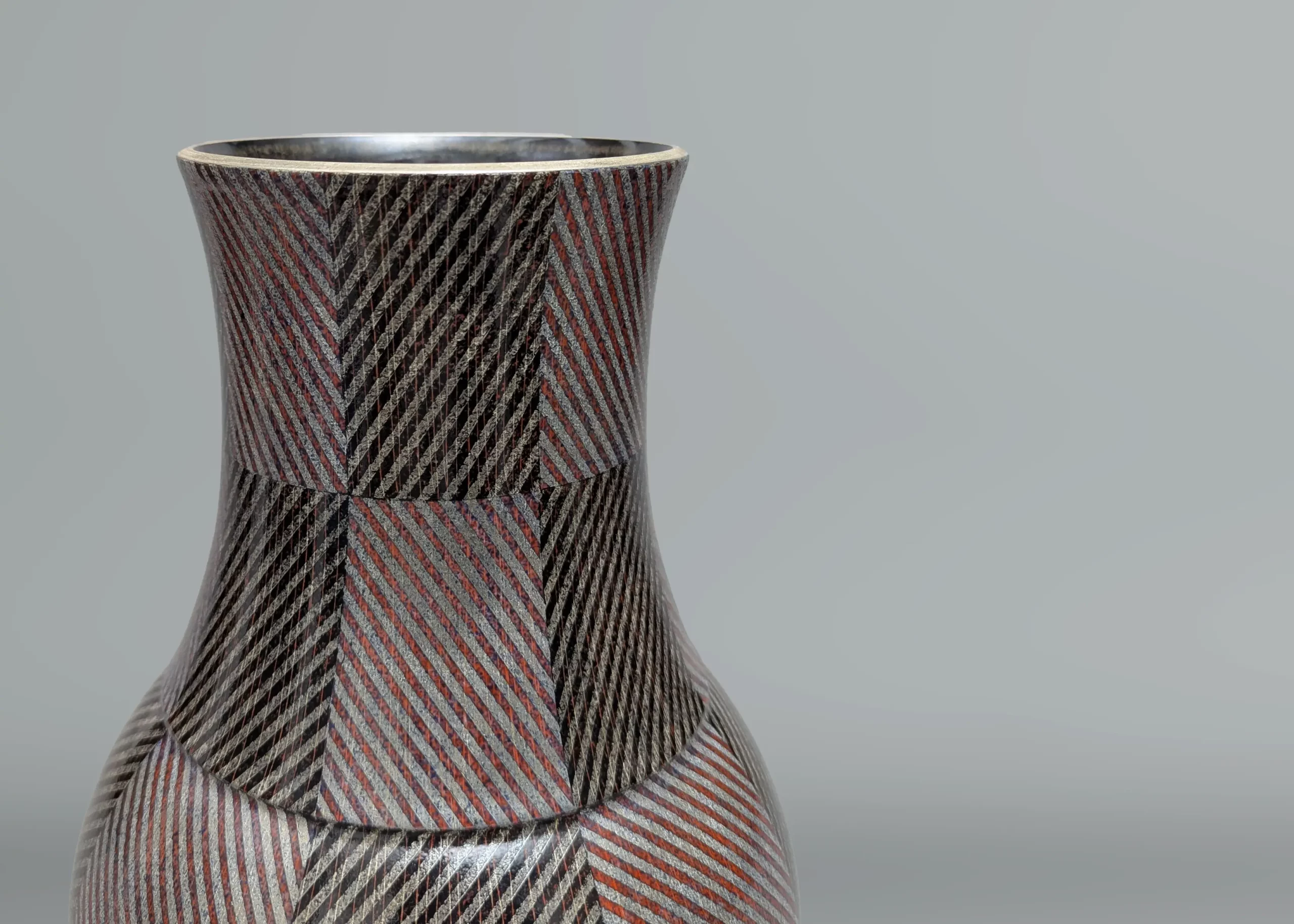
A vase with a spherical body and a flared neck, covered with a geometric checkerboard design made of squares filled with finely drawn diagonal lines. The restrained palette alternates black, brick red, and a silvery gray created using the ginsai technique.
Signed on the base
Heisei era, circa 2015
H. 29.5cm
In the collections of the Philadelphia Museum of Art
2 900,00 €
About Kunio Watanabe
Kunio Watanabe was born in Yamanashi Prefecture in 1967. He graduated from the Tokyo University of the Arts, where he studied ceramics. In 2006, he set up his studio in the village of Yamanakako, in Yamanashi Prefecture. He is a member of the Japan Kōgei Association and the Japan Ceramic Art Association.
His work is known for colorful geometric patterns and very precise checkerboard designs. To create them, he uses traditional Japanese techniques such as iroe—adding color over the glaze after firing—as well as kinsai and ginsai, which are decorations made with slips or with gold and silver powder mixed into the surface.
He has received many awards, including the Governor of Hokkaido Prize at the Ōtaki Hokkaido Ceramic Art Exhibition in 2010, after winning the gold medal at the same exhibition in 2009. His works have also been shown in major exhibitions such as the Japan Kōgei Exhibition, the Eastern Japan Traditional Crafts Exhibition, and the Mino Tea Ceremony Exhibition. In 2011, he represented the renewal of Japanese ceramics internationally in the exhibition Five by Eight: New Ceramic Art of Japan, presented in Philadelphia.